
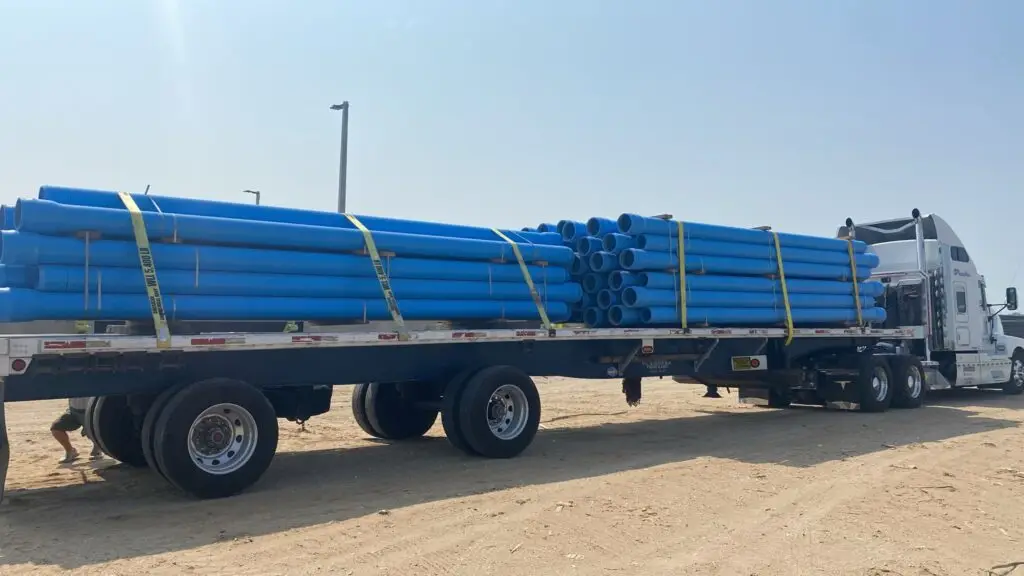
PVC Well Casing Pipe Texas: What Contractors and Water-Well Professionals Need to Know
Choosing the right PVC well casing pipe in Texas is about more than finding pipe with the correct outside diameter. The casing must protect the well, maintain its structural integrity underground, support safe water-system construction, and satisfy the specifications established for the project.
A product that appears suitable based only on diameter may not have the wall thickness, collapse resistance, connection type, or certification required for a particular well. That makes accurate product selection essential before materials are ordered or delivered to the jobsite.
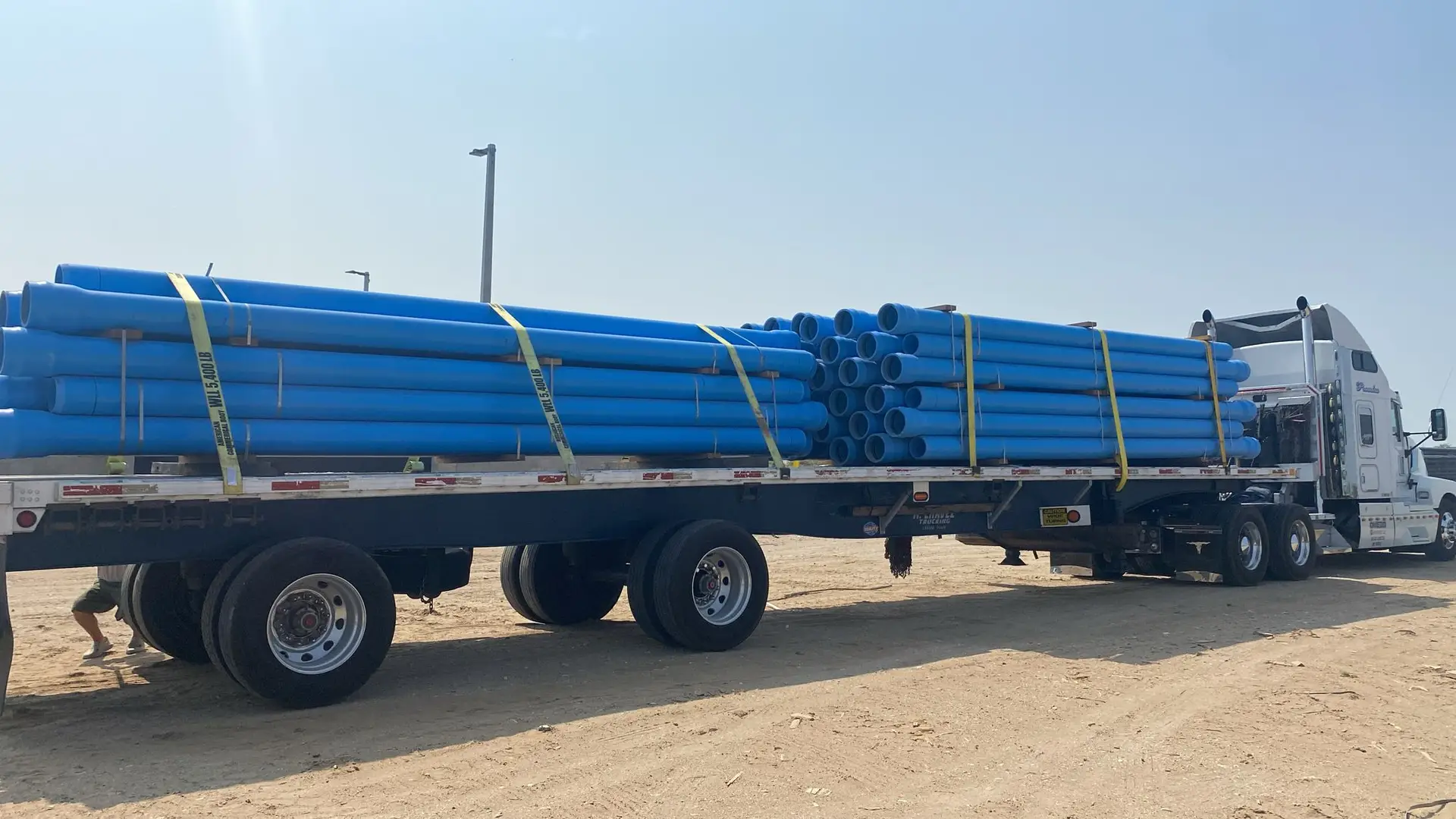
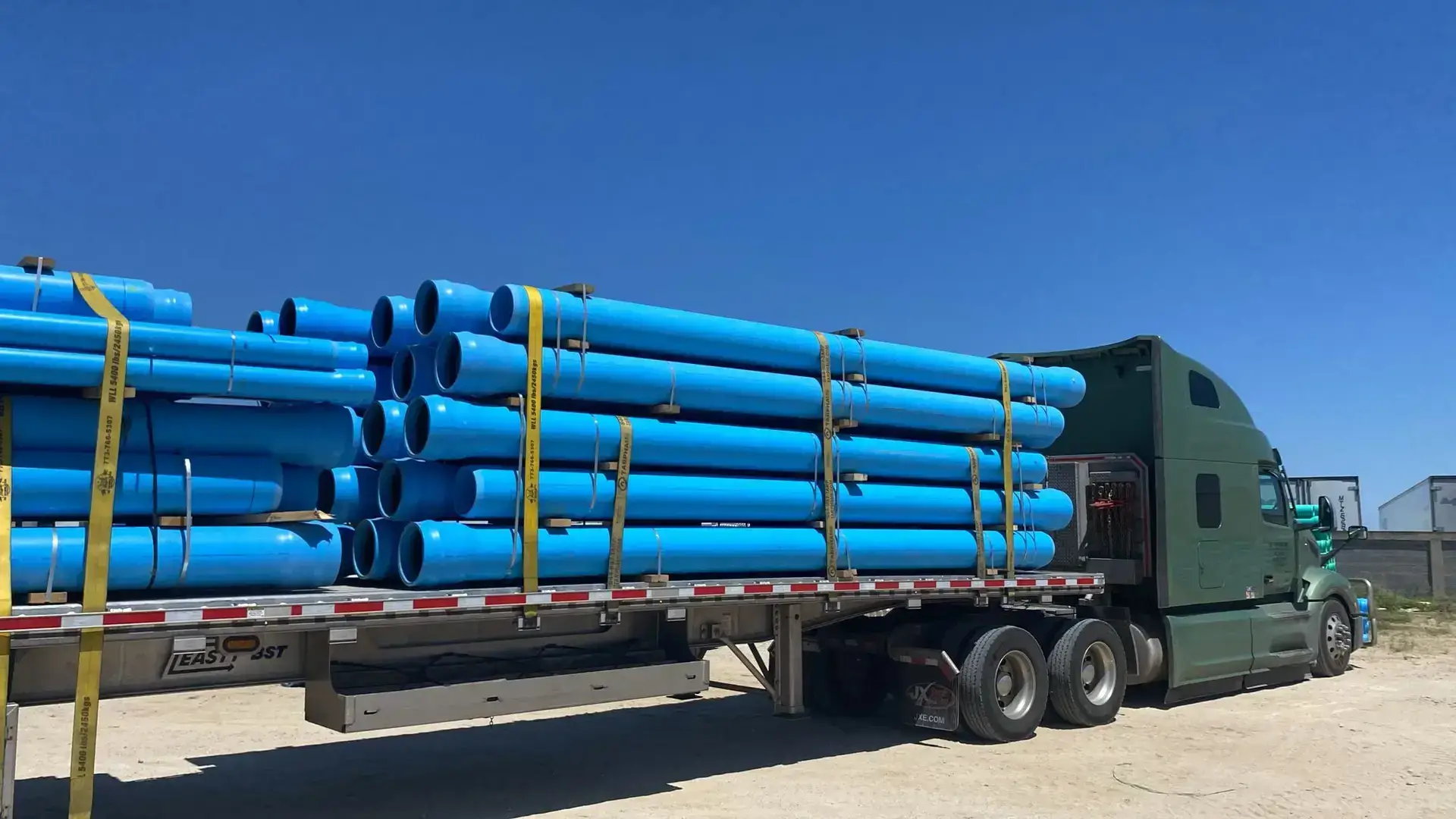
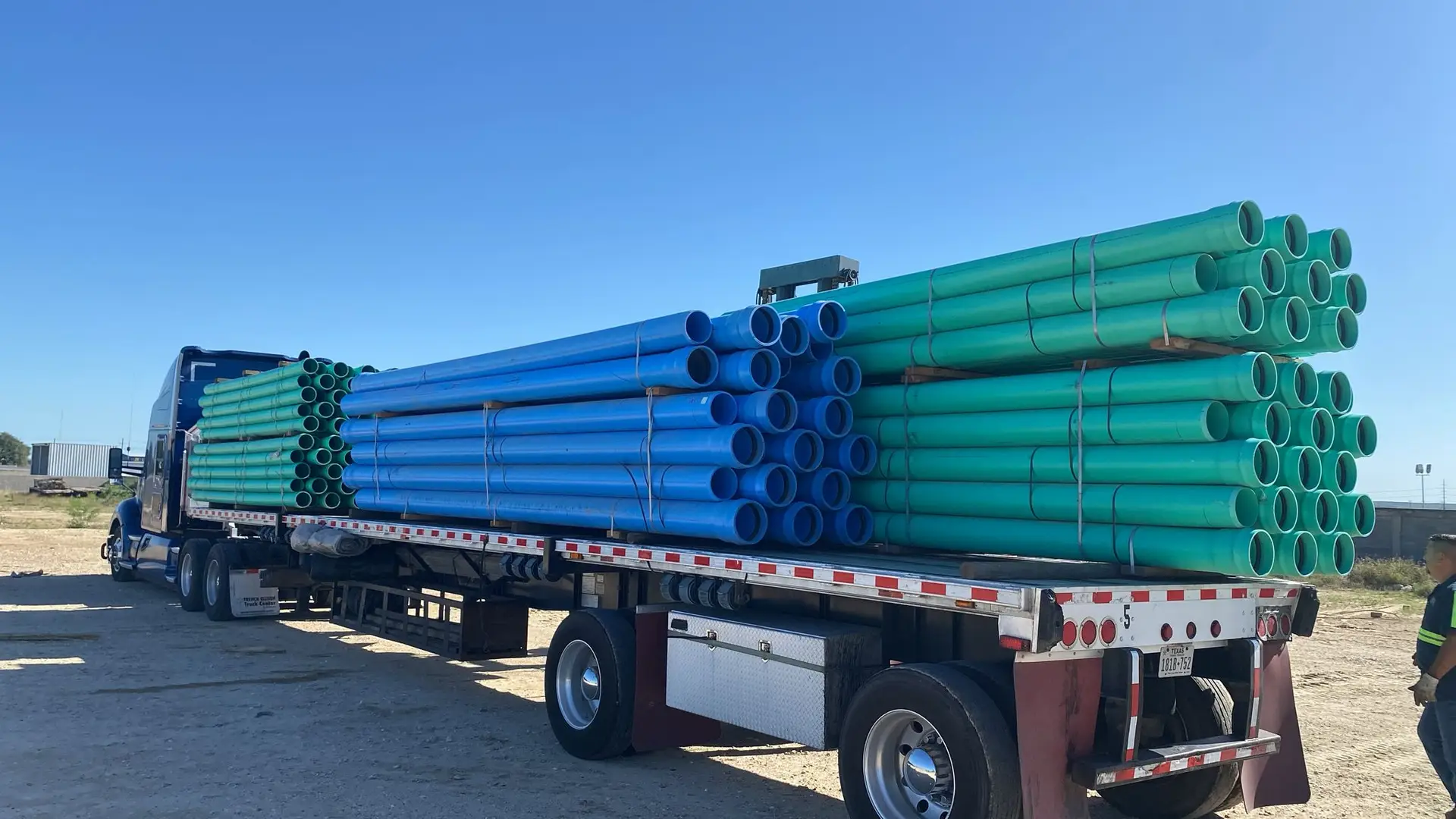
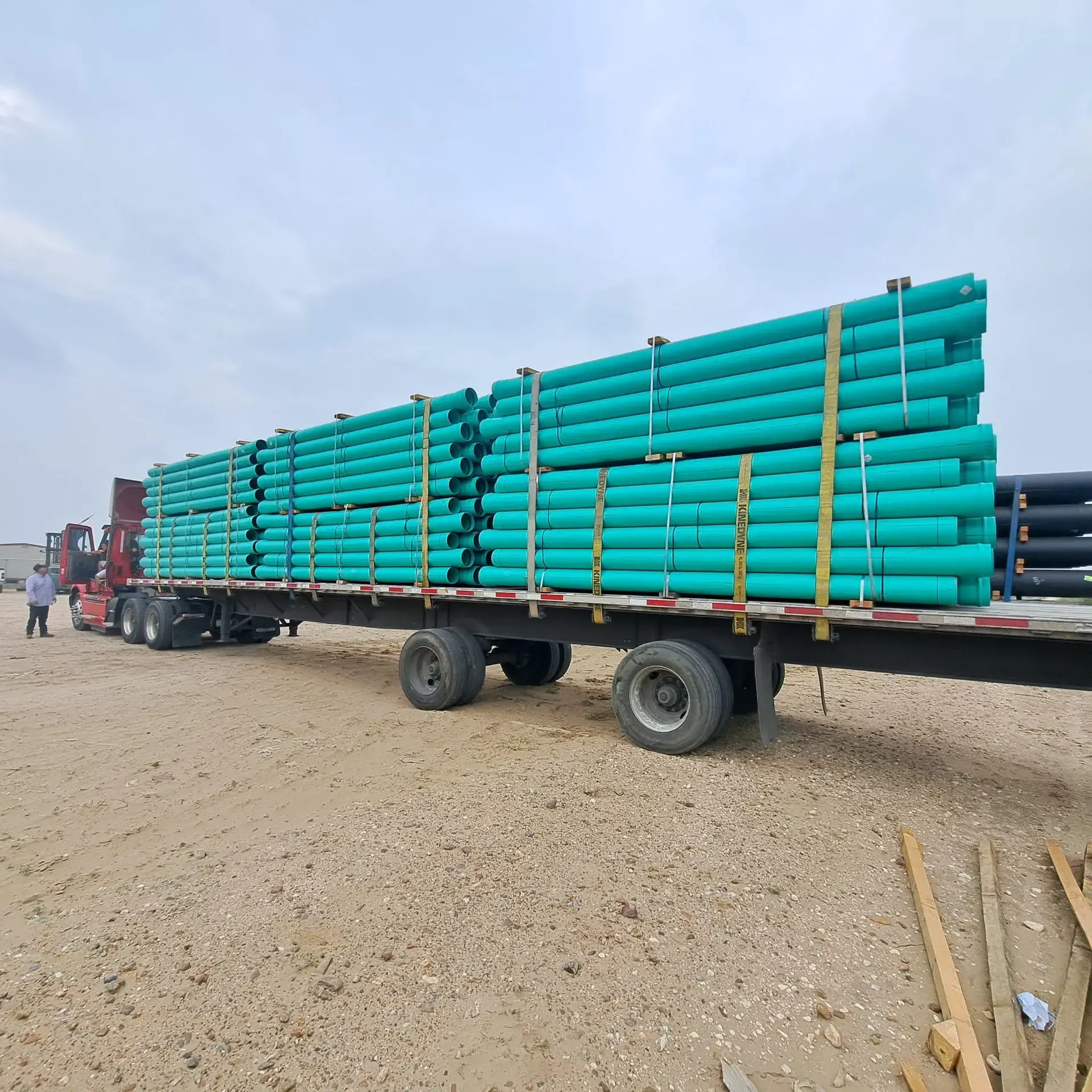
GP Distributors USA supplies wholesale PVC pipe, including well casing options, to contractors, distributors, agricultural operations, commercial buyers, and other qualified customers across Texas. Delivery is also available to customers in Oklahoma, New Mexico, Arkansas, and Louisiana.
This guide explains what well casing does, why PVC is commonly selected, which specifications buyers should review, and what information to prepare before requesting a wholesale quote.
What Is PVC Well Casing Pipe?
PVC well casing is the structural pipe installed inside a drilled well. It creates a protected passage from the surface into the well and helps separate the water-producing area from unstable soil, loose formations, shallow groundwater, and potential surface contamination.
Depending on the well design, casing may perform several important functions:
- Stabilizing the drilled borehole
- Preventing surrounding soil and rock from collapsing into the well
- Providing a protected path for pumps, drop pipe, wiring, and related equipment
- Helping isolate the well from undesirable groundwater zones
- Supporting proper sealing and grouting around the casing
- Protecting the integrity of the water source
Well casing is not simply ordinary drain or plumbing pipe placed underground. Products manufactured specifically for well-casing applications are designed and tested for the structural conditions associated with well construction.
The required material, diameter, wall thickness, joining method, installation depth, and certification can vary. Buyers should always verify the project requirements and applicable state or local well-construction rules before ordering.
Why PVC Well Casing Pipe Is Used in Texas
PVC is a practical material for many water-well applications because it combines corrosion resistance, manageable weight, consistent dimensions, and long-term durability.
PVC Does Not Rust or Corrode Like Metal
Underground materials may encounter moisture, minerals, salts, and other conditions that can contribute to metal corrosion. PVC does not rust, which makes it useful in environments where corrosion could shorten the service life of an unprotected metal casing.
This does not mean every PVC product is suitable for every subsurface environment. Well depth, formation pressure, temperature, installation method, and chemical exposure must still be evaluated. However, corrosion resistance is one of the primary reasons PVC remains a common casing material.
Lighter Weight Can Simplify Handling
PVC well casing is lighter than comparable steel casing. Its lower weight can make transportation, unloading, staging, and installation more manageable.
Easier handling can be particularly valuable when a crew is working in a rural location or on a site with limited equipment access. Proper lifting and handling procedures are still necessary because impact damage, dragging, incorrect storage, or excessive bending can compromise the pipe.
Smooth Interior Walls Support Well Operation
The smooth interior surface of PVC helps provide a clear passage for pumps, drop pipe, wiring, and other components. It also avoids the internal rust buildup associated with some metal systems.
A consistent inside diameter is important when the project team must account for pump dimensions, clearances, fittings, and future service access.
PVC Can Offer Strong Long-Term Value
Material price is only one part of the total cost of a well. Transportation, handling, installation time, maintenance, and expected service life can all affect the completed cost.
When properly specified and installed in an appropriate application, PVC can provide a cost-effective casing solution without sacrificing the performance required by the project.
Understanding ASTM F480 Well Casing
One of the most important terms buyers may encounter is ASTM F480 well casing.
ASTM F480 is the standard specification covering thermoplastic water-well casing pipe and couplings manufactured in standard dimension ratios, Schedule 40, and Schedule 80 configurations. It addresses dimensional and performance requirements relevant to thermoplastic well casing.
A reference to ASTM F480 helps distinguish purpose-manufactured well casing from general PVC products that may look similar but were produced for different applications.
Contractors should confirm the exact standard required in their plans, purchase orders, and local regulations. The specification should not be assumed based solely on pipe color, diameter, or appearance.
Product markings and documentation should be reviewed for details such as:
- Manufacturer identification
- Nominal pipe size
- Material designation
- Schedule or standard dimension ratio
- Applicable manufacturing standard
- Pressure information when applicable
- Production or traceability information
- Third-party certifications when specified
An experienced PVC well casing supplier can help identify available products that match the information provided by the buyer. Final approval of the product should remain with the contractor, engineer, well professional, or other party responsible for the project.
NSF Certification and Potable Water Wells
When well casing will be used in connection with drinking water, buyers may also encounter NSF/ANSI/CAN 61 and NSF/ANSI 14 requirements.
NSF explains that it tests and certifies plastic piping components for compliance with applicable product specifications and health-effects requirements. NSF maintains searchable listings that allow buyers and project professionals to verify certified products.
Certification requirements should be confirmed before ordering. A product being made from PVC does not automatically mean it carries every certification required for potable-water service or a particular jurisdiction.
The purchase specification should clearly state when NSF certification, ASTM F480 compliance, or another standard is required. Asking for “white PVC casing” without identifying the applicable standard can lead to confusion, delays, or the wrong material arriving at the project.
Schedule 40 Well Casing Pipe Versus SDR Pipe
PVC well casing is available in several wall configurations. Two descriptions buyers frequently encounter are Schedule 40 and SDR.
Schedule 40 Well Casing Pipe
Schedule 40 well casing pipe follows a schedule-based dimensional system. The relationship between diameter and wall thickness changes as nominal pipe size increases.
Schedule 40 is familiar across many PVC applications, but the schedule alone does not establish that a product is approved for well-casing use. Buyers should still verify that the requested pipe complies with ASTM F480 and any additional project requirements.
SDR Well Casing Pipe
SDR means standard dimension ratio. The SDR number represents the relationship between the pipe’s outside diameter and minimum wall thickness.
Within the same material category, a lower SDR number generally indicates a thicker wall relative to the outside diameter. That does not mean the lowest available SDR should automatically be selected. Proper selection depends on the well depth, anticipated external loads, installation conditions, casing diameter, groundwater conditions, and the project design.
The contractor or system designer should specify the required schedule or SDR rather than relying on a distributor to make an unsupported engineering decision.
Selecting the Correct Water Well Casing Pipe
The correct water well casing pipe must match the complete application, not just one measurement. Before placing an order, buyers should review the following factors.
Well Depth and Installation Conditions
A shallow well in stable soil does not experience the same conditions as a deeper well passing through multiple geological formations.
Deeper installations may expose casing to greater external forces. Grouting, formation movement, installation technique, and hydrostatic conditions can also affect casing performance. These factors should be evaluated by the qualified professionals designing or constructing the well.
Nominal Diameter and Actual Dimensions
Nominal pipe size is a standardized designation and does not always represent an exact physical measurement. Buyers must confirm the outside diameter, inside diameter, wall thickness, and connection dimensions needed for compatibility.
The casing must accommodate the pump assembly and other downhole equipment while fitting the drilled bore and the planned annular space.
Collapse Resistance
Well casing can be exposed to external pressure from soil, groundwater, grout, and surrounding formations. If the casing wall is not appropriate for those conditions, it may deform or collapse.
Collapse resistance should be considered during the design stage. Product selection should not be based only on internal pressure ratings because well casing can face significant forces from outside the pipe.
Connection Type
PVC casing sections may use solvent-weld connections, threaded connections, or other manufacturer-specific joining systems. The selected connection should be compatible with the pipe and approved for the installation method.
Mixing incompatible pipe and coupling systems can create weak joints, alignment problems, or installation delays. Buyers should specify the required end configuration when requesting pricing.
Applicable Codes and Project Specifications
Water-well construction is regulated, and requirements may vary based on location, well type, and intended use.
Contractors should verify current state requirements, local rules, approved materials, minimum casing dimensions, sealing procedures, and licensing requirements before beginning work. Project-specific engineering documents may impose additional requirements beyond the minimum code.
Common PVC Well Casing Ordering Mistakes
Correcting a material problem after delivery can cost far more than confirming the details before the purchase order is issued. Several common mistakes can be avoided with a more complete quote request.
Ordering by Diameter Alone
“Six-inch PVC casing” does not identify the wall configuration, standard, certification, connection, quantity, or required length. A complete request should include every known specification.
Assuming All Schedule 40 PVC Is Well Casing
Schedule 40 describes dimensions; it does not independently confirm that the pipe was manufactured and tested as well casing. Ask specifically for the required ASTM F480 well casing and verify the product markings.
Ignoring the Connection Method
The pipe may have the correct dimensions but the wrong end configuration. Identify whether the job requires solvent-weld, threaded, or another approved connection before the order is finalized.
Failing to Coordinate Accessories
Couplings, fittings, well screens, centralizers, caps, adapters, and other components may need to match the casing system. Review the complete material list early so a missing component does not stop installation.
Waiting Until the Crew Needs the Pipe
Special sizes or large wholesale quantities may require sourcing and delivery coordination. Requesting pricing early gives the distributor time to verify availability, confirm specifications, and organize transportation.
How to Request a Wholesale Well Casing Pipe Quote
Providing complete information helps GP Distributors quote the correct material more efficiently. Buyers should be prepared to supply:
- Product type: PVC water-well casing
- Applicable standard, such as ASTM F480
- Nominal diameter
- Schedule or SDR
- Required length
- Connection or end type
- Certification requirements
- Total footage or number of pieces
- Required couplings or accessories
- Delivery city, state, and ZIP code
- Requested delivery date
- Jobsite access or unloading considerations
GP Distributors is a wholesale supplier and generally sells pipe in full-lift quantities. Some exceptions may be available in specific situations, but buyers should discuss quantities with the sales team when requesting a quote.
You can review GP Distributors’ complete selection of PVC and HDPE pipe products before submitting the material list.
Why Work With a PVC Well Casing Distributor?
A dependable PVC well casing distributor does more than provide a price per foot. Wholesale buyers also need accurate order processing, reliable sourcing, clear communication, and coordinated delivery.
GP Distributors works with multiple manufacturing facilities to provide access to a broad selection of plastic pipe products at competitive wholesale pricing. The company supplies pipe for water systems, irrigation, construction, drainage, industrial work, and other professional applications.
Customers can source products through one supplier while receiving assistance with material availability and delivery coordination. This can be especially valuable for companies managing projects in multiple markets or ordering several PVC and HDPE product categories.
GP Distributors serves customers throughout Texas and delivers to New Mexico, Oklahoma, Arkansas, and Louisiana. Availability and delivery timing depend on the exact product, quantity, destination, and current supply conditions.
PVC Well Casing Pipe Texas FAQs
Can ordinary PVC pipe be used as water-well casing?
Contractors should use pipe manufactured and approved for the intended application. General-purpose PVC should not be assumed to satisfy well-casing standards simply because its diameter or color appears correct. Verify ASTM F480 compliance, certification, dimensions, and local requirements.
Is Schedule 40 PVC always suitable for a well?
No single wall configuration is appropriate for every well. Suitability depends on depth, diameter, soil and groundwater conditions, external loading, joining method, applicable regulations, and the engineered design.
Does PVC well casing require NSF certification?
Certification requirements depend on the project and jurisdiction. Potable-water installations commonly require products certified to applicable NSF standards. The buyer should verify the precise requirements before ordering.
Does GP Distributors sell PVC well casing directly to homeowners?
GP Distributors operates as a wholesale plastic-pipe distributor and does not generally sell directly to end users. Contractors, distributors, commercial purchasers, and other qualified buyers can contact the company to discuss an order.
Where does GP Distributors deliver?
GP Distributors supplies customers throughout Texas and also delivers pipe to Oklahoma, New Mexico, Arkansas, and Louisiana. Delivery availability should be confirmed using the destination ZIP code and required material list.
Order PVC Well Casing Pipe From GP Distributors USA
The performance of a well begins with materials that match its design. Diameter, wall configuration, connection type, manufacturing standard, certification, and quantity should all be confirmed before the casing reaches the jobsite.
If your company needs PVC well casing pipe in Texas, GP Distributors USA can help you source wholesale pipe and coordinate delivery for your project.
Contact GP Distributors USA for a wholesale quote or call 346-500-9939. Include the required size, Schedule or SDR, applicable standard, quantity, delivery ZIP code, and requested date so the team can respond with accurate product and availability information.